
by ejceasar
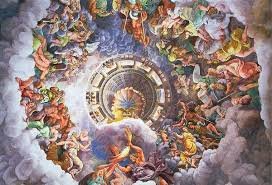
Myth and Mythologies. Myths can be classified as origin myths, cultural myths and political myths and mythology is a collection of myths belong to a time period, region or religion
A flood myth also known as deluge myth is a narrative in which great flood, usually sent by a deity or deities to destroy civilizations as an act of divine retribution. Flood myths are common across a wide range of cultures, extending back to Bronze Age and Neolithic prehistory.
Every mythology has its own version of creation myths, or other wise commonly known as how the world came in to existence. In Egyptian Mythology, the creation myth starts with an egg in the ocean. There was a single egg floating in the ocean and the egg hatched and the son of Ra was born. According to the Indian Mythology, the universe was created by Lord Brahma out of himself.
The idea of an unimaginable war that threatens to tear apart the cosmos connects with us so deeply that it still powers our epic stories. The Lord of the Rings, Avengers, Hobbits, and countless others all feature this age-old trope. It can be found in the legends of almost every ancient culture.
We all know the myth of Atlantis: a utopian city wiped out in a single night thanks to an unearthly cataclysm. But Atlantis is only the most famous of mythical lost cities. Near-identical stories crop up with such regularity that it’s tempting to think they must be somehow related.Take Iram (also known as Ubar). A fabled city in the deserts of modern Saudi Arabia, Iram is said to have been wiped out in a single night when Allah buried it under a flood of sand. In other words, it’s the Atlantis myth translated to a world without water. Then you have Ys off the coast of France, which was supposedly flooded around the 5th century by a mythical warrior king. And that’s before we get onto the story of Sodom and Gomorrah and the Hindu myth of Tripura, which both involve gods wiping out immoral cities in a rain of fire.In short, the idea of a city obliterated overnight is so powerful it seems to show up everywhere. Are these half-remembered tragedies with some basis in fact (like Pompeii) or just stories that play to the apocalyptic fantasist in all of us? We’ll leave it to you to decide.
Jesus’s resurrection is the big selling point of Christianity, a unique moment that established Christ as the one true savior. At least that’s the idea. In reality, the idea of a dying deity or important human who is later resurrected has been around for millennia.Most famously, this includes the story of Osiris, the ancient Egyptian god whose birth was heralded by a star, who was betrayed by a friend, was murdered, and was later resurrected. But there are less explicit versions too. The Greek cult of Dionysus had their figurehead killed off every two years, only to rise again at a later date. Persephone also died regularly, and many pagan traditions from Scandinavia to Central America involved gods dying and returning to life or men dying and coming back as deities.Perhaps most interestingly of all, a historical tablet known as “Gabriel’s Revelation” allegedly tells the story of a Jewish rebel known as Simon who was killed by the Romans, only to be resurrected three days later. The catch? It was written in 4 BC, over 30 years before Jesus allegedly pulled off the same trick. Either it’s a mistranslation, or the Son of God was building on centuries of groundwork by other deities.
Dragons are likely the most traveled creature in all of mythology. Even more than vampires, they have a habit of turning up in societies and cultures so far apart in time and space you’d think it was impossible. There are ancient Sumerian tablets that record the act of dragon-slaying, Greek tales of dragons cavorting with other monsters, and an entire science built around the uses of their bones in China. In Central America, the Mayans worshipped the feathered snake Quetzalcóatl, while both Norse and Christian mythologies specifically mention dragons.As late as 1886, Victorian scientists still held that dragons had once existed but had gone extinct. Not until dinosaurs became firmly established in the public mind did people see the probable link between ancient fossils and dragon myths. Currently, our best guess is that various cultures all stumbled over dino bones at some point and translated them into gigantic mythological beasts.
Thanks to the occasional self-indulgent movie adaptation, most of us probably have a vague knowledge of the poems of Homer. Considered the earliest examples of Western literature, his Iliad and Odyssey are epic myths of tortured heroes fighting their way across oceans and continents in search of metaphorical salvation—and they appear in near-identical form in almost every culture.It’s called the “hero’s journey,” and just about all epic stories throughout history have followed the specific model. Famously, George Lucas deliberately based the first Star Wars on it, and you can find its influence in The Lord of the Rings, the Oz books, and even Harry Potter. But this archetypal myth was around even before fancy-pants anthropologists handed it over to lazy scriptwriters.The Sumerian Epic of Gilgamesh, the story of Sinbad the Sailor in the 1,001 Nights, the legend of King Arthur, the tale of the Argonauts . . . all of these and plenty more fit the structure of the hero’s journey just like Homer’s awesome poems above. In fact, nearly every single culture in recorded history has myths that fall into this category. Even Moses’s epic wanderings in the Bible fit this model. We as a species truly are lazy storytellers.
Cultural myths don’t just entertain us and record historical events. They also serve to explain why the world is the way it is. Hence the prevalence of stories designed to give a reason for some mystery of existence.In the Bible, we have the Tower of Babel, which explains why we have different languages. God’s speech prior to expelling Adam and Eve from Eden is another example, giving a reason for both the agony of childbirth and why ancient man had to toil all day in the fields. Wander across traditions into the stories of the Ancient Greeks and the legend of Prometheus demonstrates why fire is so valuable, while the story of Pandora gives a reason for the existence of disease and suffering.Start looking for them and you’ll find these explanatory myths scattered across every culture in history. There are myths that explain why rhinoceroses have no hairs, why incest is forbidden, and how medicine came into existence. Anything you can think of has some poetic explanation somewhere. In an unscientific age, poetry was often all we had.
Everything that begins has an end, and our ancient ancestors knew that as simply as we do. No surprise then that most cultures carry an End of Times myth to counter their creation story—a sort of consolation prize for those who won’t live to see the actual end (i.e. everyone).For Christians, this apocalypse is a gigantic epic that plays out over many, many years and involves so many disasters, wars, and calamities that it’s hard to keep track. Same with the Norse Ragnarok, which is a collection of disasters and battles that results in the Earth being drowned and recreated afresh. In Hinduism, it’s another epic battle followed by a rebooted universe, while Buddhism annihilates the world in a pyrotechnic fireworks display so amazing it deserves its own Michael Bay film.In other words, most humans throughout history have lived with their own personal vision of the end of everything, one that makes sense in the context of their lives and cultures. And that’s all these myths really are: ways for us humans to make sense of the world we live in, no matter when or where we are. It’s just an added bonus that some of them make absolutely awesome stories, too.
Learn a few fun facts

The red clothes worn by Hindu brides are associated with "scarlet women" in Christianity
The white clothes that represent virginity and purity in the Christian mythosphere are associated with spirituality and otherworldliness in the Hindu mythosphere; are restricted to monks, priests, and widows; and do not form part of household rituals.
The goat, the symbol of virility that is sacrificed to the Hindu Goddess, is the symbol of the devil in the biblical worldview.
The yoginis of Hinduism, who are handmaidens of the Goddess and are wild erotic creatures, recall the witches coven of the Christian mythosphere.
The pentagram is the symbol of Lakshmi, Hindu goddess of wealth, and Shukra, guru of demons, and is associated with Venus, wealth, fertility, creativity, and erotic power in Hindu astrology, but is considered the mark of the devil in Christianity.
'described in Western literature as the "dark drinker of blood" and is associated with witchcraft.
The serpent, which is associated with earth's fertility and occult wisdom in Hinduism, is considered a manifestation of the devil in biblical traditions.
To the Western eye the swastika is the symbol of Hitler and the Holocaust. To Hindus it is associated with auspiciousness and fertility.
Demon in Judeo-Christian-Islamic Paradigm is Evil being who opposes God but in Hindu Paradigm Demon is a Being who lives under-ground in bejeweled cities, fights gods, and possess the secret of rejuvenation
Gods in Judeo-Christian-Islamic Paradigm False deities worshipped by nonbelievers and pagans whereas in Hindu Paradigm Celestial beings who live above ground or in the skies, fight demons, and have consumed the elixir of immortality
The Tumbuka people are an ethnic group that live primarily in northern Malawi
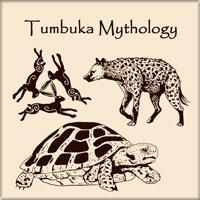
Tumbuka has many myths that constitute part of the Tumbuka cultural heritage.
These myths, told around fires at night, often to the accompaniment of drumming and choral responses, aim to teach children moral behavior and to entertain. The Tumbuka people are an ethnic group that live primarily in northern Malawi and eastern Zambia. Tumbuka mythology is rich with stories, myths and legends which are passed down from generation to generation through oral tradition. Some of the famous myths from Tumbuka mythology include:
The story of Mbulu:
Mbulu is the supreme being and creator of the Tumbuka people. He is often depicted as a powerful and benevolent god who watches over the Tumbuka people.
The story of Mwali:
Mwali is the god of war and is known for his strength and bravery. He is often invoked in times of conflict and is considered a protector of the Tumbuka people.
The story of Mlengi:
Mlengi is the god of fertility and is responsible for the abundance of crops and the growth of the Tumbuka people.
The story of Chaminuka:
Chaminuka is a powerful and wise ancestor who is considered to be the founder of the Tumbuka people. He is often invoked for guidance and wisdom.
The story of Mpherere:
Mpherere is the god of thunder and lightning and is known for his power and fury. He is often invoked to bring rain and is considered a protector of the Tumbuka people.
These myths, along with others, are used by the Tumbuka people to explain the origins of their people and their customs and to reinforce their traditional beliefs and values. Tumbuka people have a strong belief in traditional religion, ancestor worship and animism.
Mbuti (Bambuti) mythology is the mythology of the African Mbuti (also known as Bambuti) Pygmies of Congo.
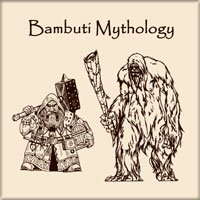
Mbuti (Bambuti) mythology is the mythology of the African Mbuti (also known as Bambuti) Pygmies of Congo. The Bambuti people, also known as the Pygmies, are a group of indigenous people who live in the Ituri rainforest in the Democratic Republic of Congo. They have a rich and diverse mythology that reflects their culture and beliefs. Here are a few examples of famous myths from Bambuti mythology:
- The creation myth: The Bambuti believe that the world was created by a god named Nkuba, who formed the earth, sky, and all living things. They also believe that Nkuba created the first man and woman, and gave them the task of populating the world.
- The myth of the first fire: The Bambuti believe that fire was brought to earth by a trickster figure named Mokèlé-mbèmbé, who stole it from the gods and gave it to humans.
- The myth of the first hunting: The Bambuti believe that hunting was taught to humans by a god named Woot, who also taught them how to make arrows, spears, and traps.
- The myth of the first death: The Bambuti believe that death was brought to the world by a god named Nkondi, who punished humans for their disobedience.
- The myth of the first rain: The Bambuti believe that the first rain was brought to the world by a god named Nkondi, who punished humans for their disobedience.
- The myth of the afterlife: The Bambuti believe that the souls of the dead go to the land of the ancestors, which is a place similar to the earth but more beautiful and peaceful. They also believe that the souls of the wicked go to a place of punishment.
Please note that this is just a small sample of the Bambuti mythology stories, and there are many more myths and legends that are important to the Bambuti people.
The people of the lightning / Sons of Bushongo
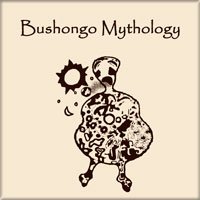
The Bushongo or Songora are an ethnic group from the Congo River and surrounding areas. The creation god(or chembe) in Bushongo mythology is called Bumba.
The Bushongo people, who live in what is now the Democratic Republic of Congo, have a rich and diverse mythology that includes many different stories and legends. Here are a few examples of famous myths from Bushongo mythology:
The creation myth:
The Bushongo believe that the world was created by a god named Mbidi Kiluwe, who formed the earth, sky, and all living things.
The myth of the first man:
According to Bushongo legend, the first man, named Kondi, was created by Mbidi Kiluwe and was given the task of populating the world.
The myth of the first woman:
The Bushongo believe that the first woman, named Luba, was created by Mbidi Kiluwe and was given the task of helping Kondi to populate the world.
The myth of the first fire:
The Bushongo believe that fire was brought to earth by a god named Lumona, who gave it to humans as a gift.
The myth of the first death:
The Bushongo believe that death was brought to the world by a god named Cagn, who punished humans for their disobedience.
The myth of the first rain:
The Bushongo believe that the first rain was brought to the world by a god named Cagn, who punished humans for their disobedience.
Please note that this is just a small sample of the Bushongo mythology stories, and there are many more myths and legends that are important to the Bushongo people.
The Maasai mythology involves several beliefs of the Maasai people

The Maasai mythology involves several beliefs of the Maasai people, an ethnic group living in Kenya and Tanzania.
The Maasai people are a semi-nomadic ethnic group that lives in southern Kenya and northern Tanzania. They have a rich oral tradition that includes myths, legends, and stories that are passed down from generation to generation. Here are a few examples of famous myths from Maasai mythology:
The creation myth:
The Maasai believe that the world was created by Enkai, the god of the sky and rain. He created the first Maasai people and the animals, and he gave them all the land to live on.
The story of the rainbow:
The Maasai believe that the rainbow is a bridge between the world of the living and the world of the dead. The rainbow is said to be created by Enkai, and it is a sign that he is watching over the Maasai people.
The story of the baobab tree:
The Maasai believe that the baobab tree is sacred and that it was created by Enkai to provide food and shelter for the animals. They also believe that the tree is a source of wisdom and that it holds the secrets of the universe.
The story of the lion:
The Maasai believe that the lion is a sacred animal and that it is a symbol of strength and courage. They also believe that the lion is a messenger of Enkai and that it brings important messages to the Maasai people.
These myths, along with others, are used by the Maasai to explain the origins of their people and their customs and to reinforce their traditional beliefs and values.
Janus as the god of all beginnings and believe that his association with doorways is derivative
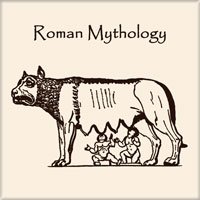
Roman mythology is a collection of traditional stories, beliefs, and religious practices that ancient Romans used to explain the world around them and the natural phenomena they observed. The Roman myths are heavily influenced by the myths of the ancient Greeks, as the Romans adopted many of the Greek gods and goddesses and adapted them to their own culture. Here are some famous myths of Roman mythology:
Famous Myths of Roman Mythology
-
The myth of Romulus and Remus
This is the story of the twin brothers who were suckled by a she-wolf and went on to found the city of Rome.
-
The myth of Jupiter and his brothers
Jupiter, the king of the gods, overthrew his father Saturn and his brothers to become the ruler of the gods.
-
The myth of Apollo and Daphne
This is the story of the god of poetry and music, Apollo, who falls in love with the nymph Daphne, who turns into a laurel tree to escape him.
-
The myth of Venus and Adonis
This is the story of the goddess of love and beauty, Venus, who falls in love with the mortal Adonis.
-
The myth of Mars and Rhea Silvia
This is the story of the god of war, Mars, who impregnates Rhea Silvia, the Vestal Virgin, and the mother of the twins Romulus and Remus.
-
The myth of Mercury and Herse
This is the story of the messenger of the gods, Mercury, who seduces the mortal Herse, and the daughter of the king of Athens.
-
The myth of Saturn and Ops
This is the story of the god of agriculture and the ruler of the Golden Age, Saturn, who marries Ops, the goddess of fertility and abundance.
Mythological legends and deities
Greek-mythology

Bellerophon was a famous Greek hero, mostly known for defeating Chimera, a fire-breathing mythical monster. He was also recognised by riding white Pegasus which was a sort of a gift from Athena for his devotion to the goddess. Bellerophon was, according to Homer's Iliad, a son of Glaucus and Eurymede of Corinth.
Greek-mythology
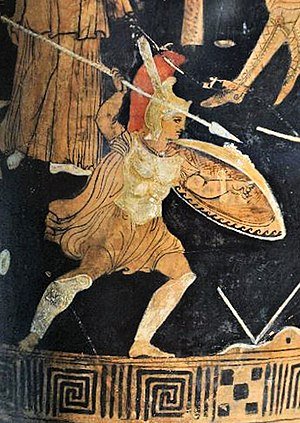
In Greek mythology, Achilles or Achilleus was a hero of the Trojan War, the greatest of all the Greek warriors, and is the central character of Homer's Iliad. He was the son of the Nereid Thetis and Peleus, king of Phthia.
Norse-mythology
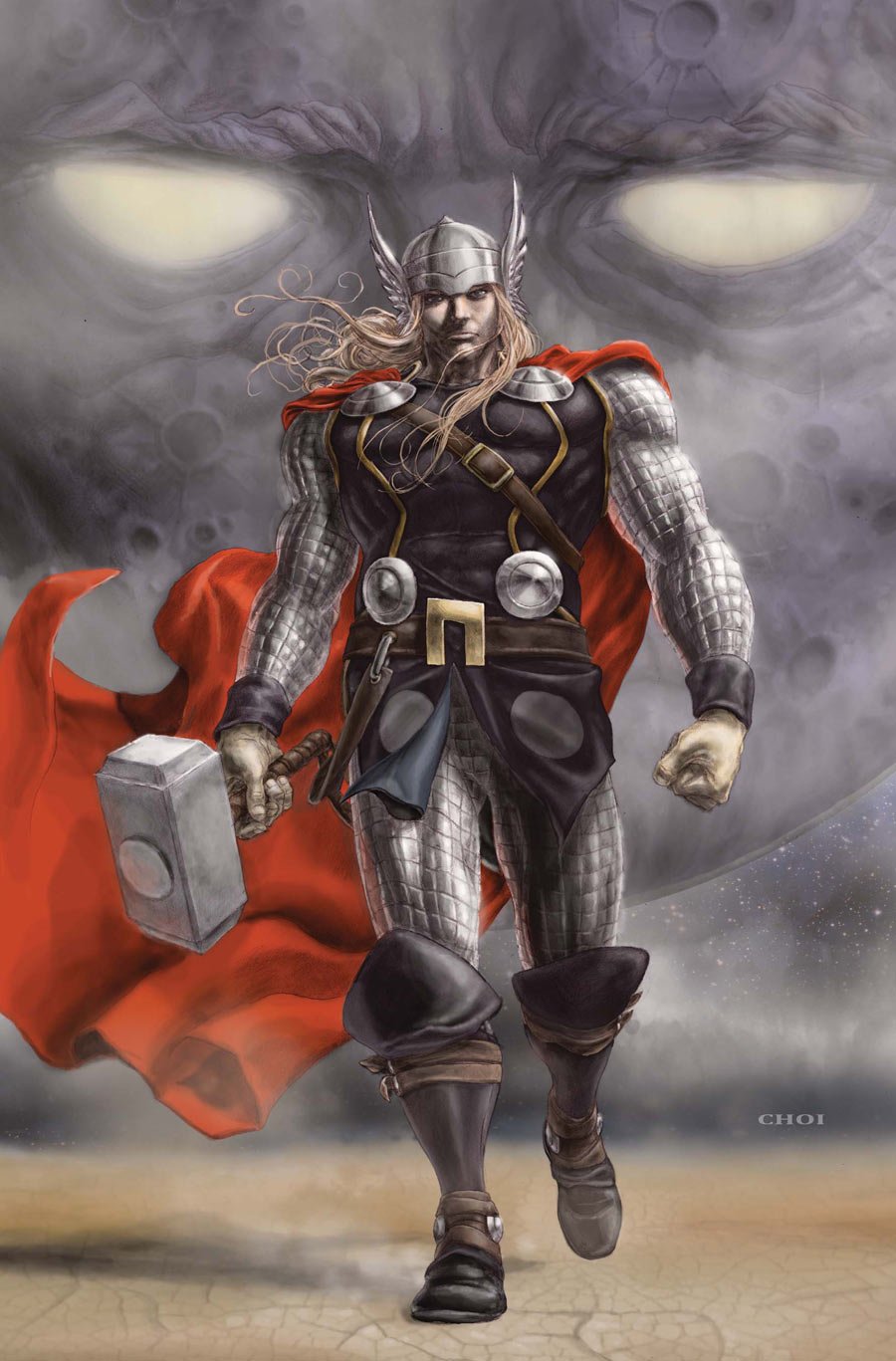
He it was who men and their labors from the wild forces of nature, personified as Giants. Thus he held sway in certain Northern regions over air and climate, over rain and harvest. 2 As the god of fertility, however, he had to divide his rule with the gods of the Vanir; but thunder and lightning always were the special province of Thor, who according to the Norse myths was constantly engaged in battle against the Giants. He rode in a chariot which, as it rolled along, produced thunder. 1 The chariot was drawn by two goats, Tanngnjost 2 and Tanngrisni; 3 these goats Thor could kill and eat and bring to life once more provided all the bones are gathered up in the hides. Because Thor usually drove these goats, he was called Riding-Thor; 4 he had other names as well, such as Ving-Thor, Lorridi, Einridi
Greek-mythology
In Greek mythology, Alcyoneus or Alkyoneus (/ælˈsaɪəˌnuËs/; Ancient Greek: ἈλκυονεÏÏ‚ Alkuoneus) was a traditional opponent of the hero Heracles. He was usually considered to be one of the Gigantes (Giants), the offspring of Gaia born from the blood of the castrated Uranus.
hindu-mythology

Shiva is one of the principal deities in Hinduism. He is the Supreme Being within Shaivism, one of the major traditions within contemporary Hinduism. Shiva is known as "The Destroyer" within the Trimurti, the Hindu trinity that includes Brahma and Vishnu. In Shaivism tradition, Shiva is one of the supreme beings who creates, protects and transforms the universe.
Shiva is usually worshipped in the form of Lingam. Worshippers of Shiva are called "Shaivites" or "Shaivas". Shaivas believe that Shiva is All and in all, the creator, preserver, destroyer, revealer and concealer of all that is.
Shiva has many benevolent and fearsome depictions. In benevolent aspects, he is depicted as an omniscient Yogi who lives an ascetic life on Mount Kailash, as well as a householder with wife Parvati and his two children, Ganesha and Kartikeya. In his fierce aspects, he is often depicted slaying demons.
Shiva is also regarded as the patron god of yoga and arts. The iconographical attributes of Shiva are the serpent around his neck, the adorning crescent moon, the holy river Ganga flowing from his matted hair, the third eye on his forehead, the trishula or trident, as his weapon, and the damaru drum. He is usually worshipped in the aniconic form of Lingam.
Greek-mythology

Oedipus, in Greek mythology, the king of Thebes who unwittingly killed his father and married his mother. Homer related that Oedipus's wife and mother hanged herself when the truth of their relationship became known, though Oedipus apparently continued to rule at Thebes until his death.
Slavic-mythology
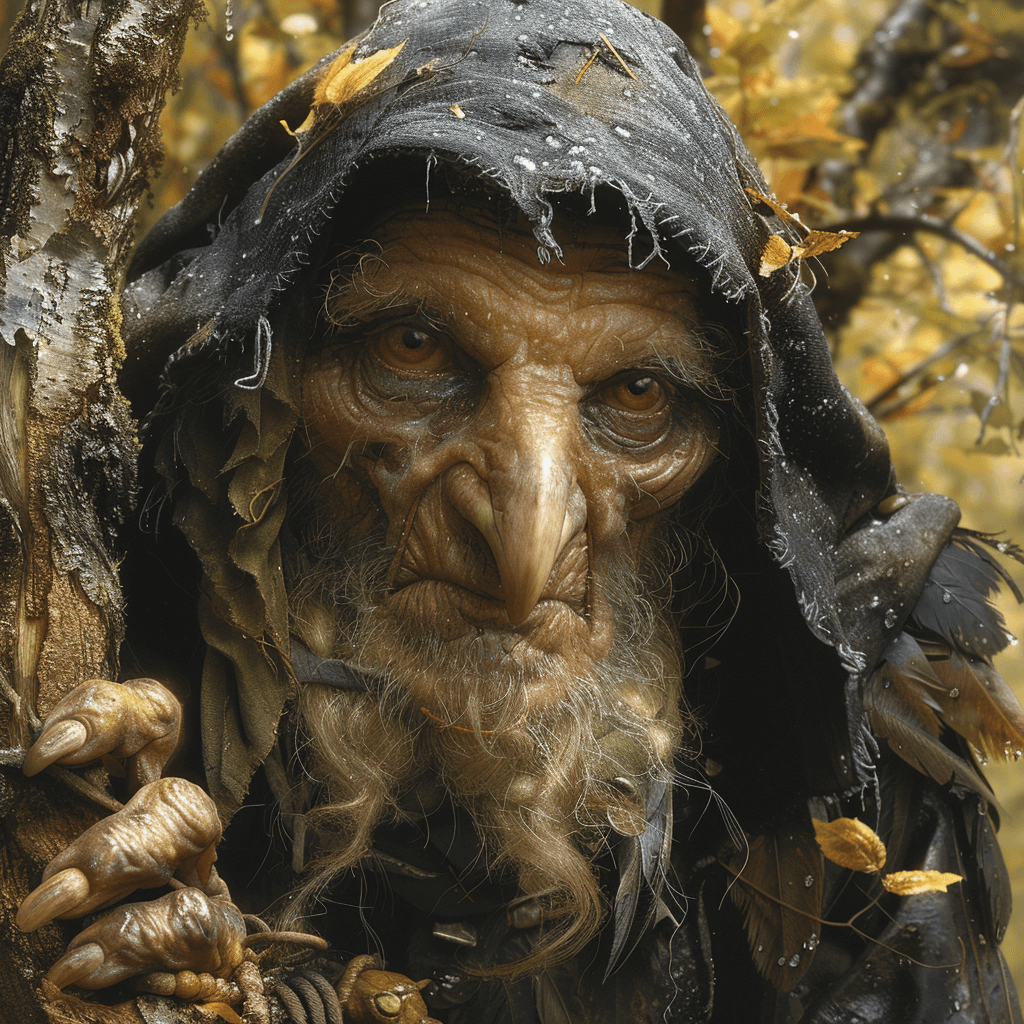
A supernatural being depicted as a witch who lives in a hut that stands on chicken legs, known for her wisdom and ambiguity.
egyptian-mythology

The sun god who created the world and sailed through the sky in a boat
Greek-mythology
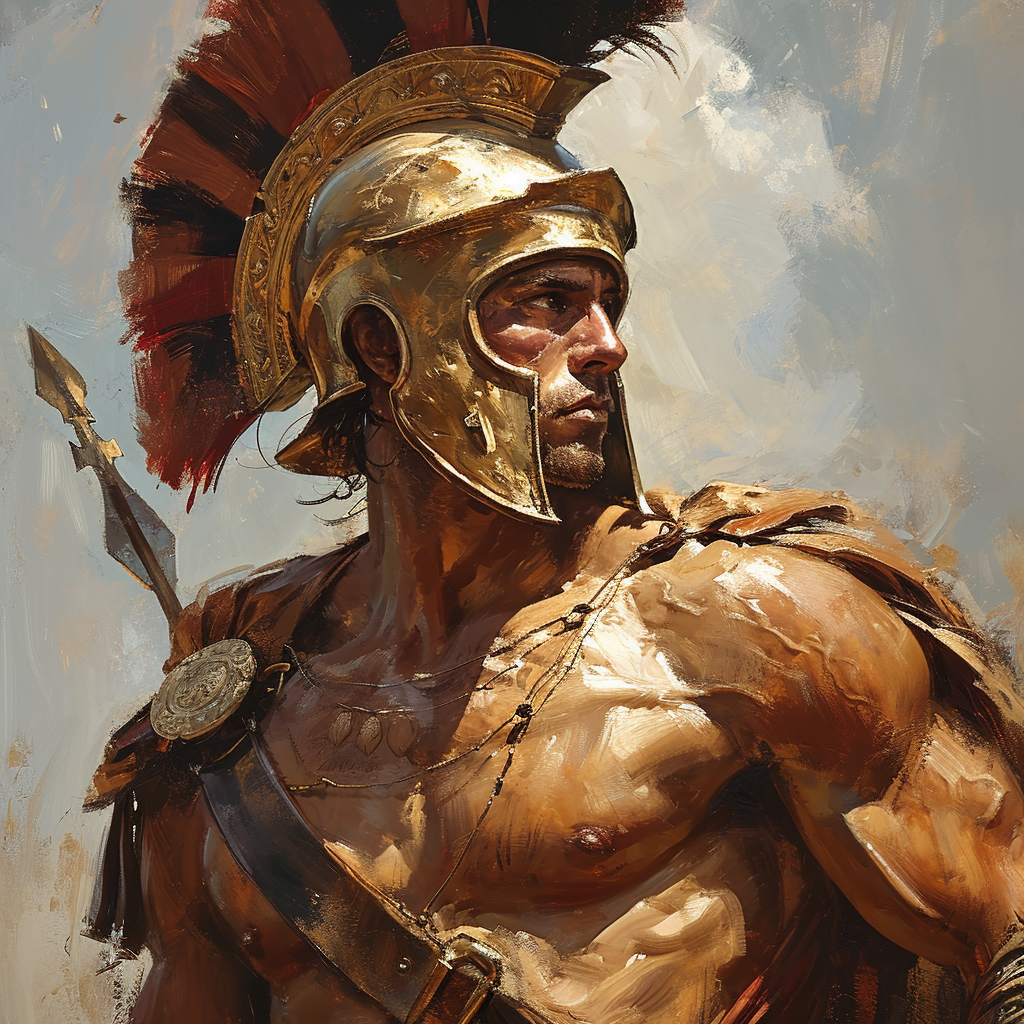
In Greek mythology, Palamedes is a somewhat less prominent figure compared to heroes like Achilles or Odysseus, and as a result, there are fewer detailed descriptions of his appearance in the classical texts. However, he is often portrayed as a figure of significant intellect and cunning, much like Odysseus. In the context of Greek mythology and its artistic representations, characters' appearances were often idealized, reflecting the cultural ideals of beauty, heroism, and nobility. Therefore, Palamedes might typically be depicted as a handsome and noble-looking man, in keeping with the general style of portraying heroes in Greek art and literature. Key attributes that might be associated with Palamedes could include: Noble Bearing: As a prince and a hero, Palamedes would likely be depicted with an air of nobility and dignity. Intelligent Expression: Known for his wisdom and cleverness, his face might be portrayed with a thoughtful or intelligent expression. Warrior's Physique: Like many Greek heroes, Palamedes would probably be shown with a physically strong and well-proportioned body, indicative of his status as a warrior. Classical Greek Armor: When depicted in scenes of the Trojan War, he would likely be dressed in typical Greek armor of the period, such as a helmet, cuirass (breastplate), greaves (leg armor), and carrying a shield and spear. It's important to remember that artistic representations of mythological figures can vary widely, and the images we have from ancient Greek art are subject to interpretation and artistic license. The emphasis in Greek art was often on expressing character virtues and qualities through physical form, rather than creating accurate portraits.
Greek-mythology
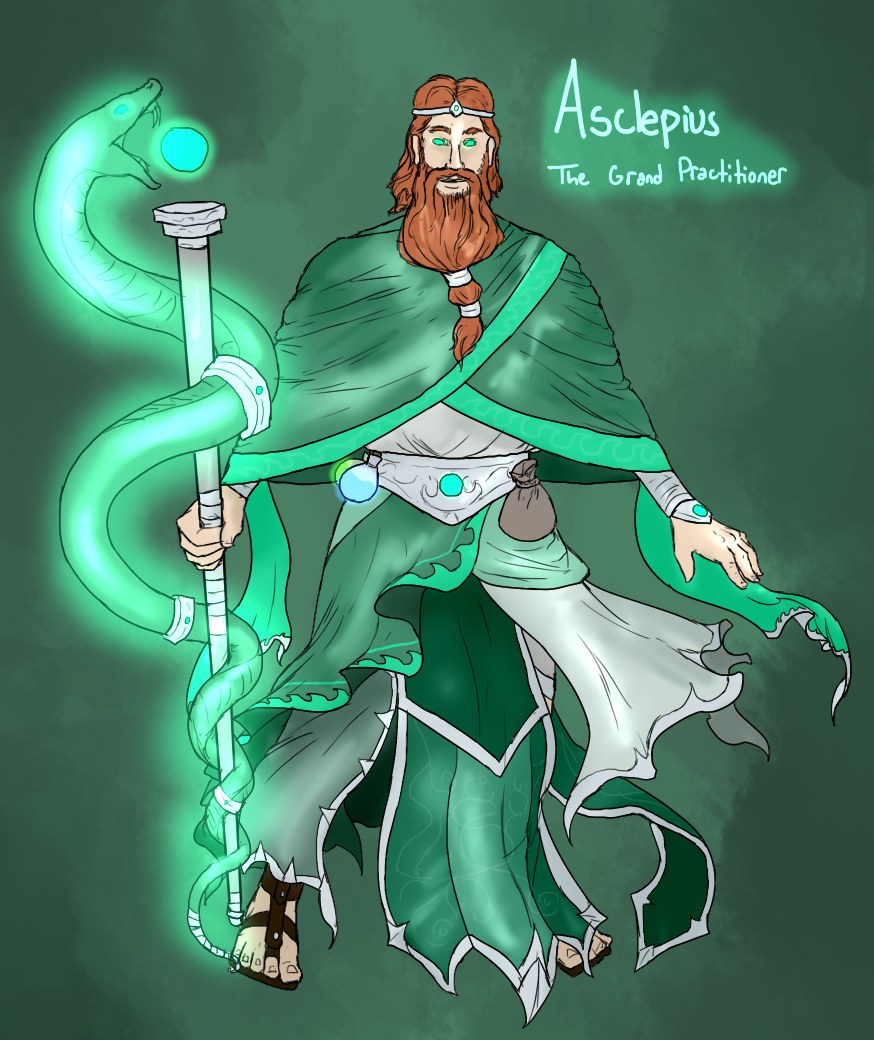
In Greek mythology Asclepius (or Asklepios) was a demi-god hero as he was the son of divine Apollo, and his mother was the mortal Koronis from Thessaly. In some accounts Koronis abandoned her child near Epidaurus in shame for his illegitimacy and left the baby to be looked after by a goat and a dog.
chinese-mythology

God of thunder, sometimes depicted with a drum in one hand and hammer in the other
Slavic-mythology

A household spirit in Slavic mythology believed to protect the home and family, but also capable of causing mischief.
Movies inspired by Mythology
Worlds collide.

When his lightning bolt is stolen, Zeus accuses Poseidon's son Percy Jackson and gives Poseidon's son fourteen days to return it, otherwise he will initiate a war amongst the gods. Meanwhile the teenager, Percy, who is dyslexic and has ADHD is visiting The Museum of Metropolitan of Art and is attacked by a Fury disguised in his teacher. His physically handicapped best friend Grover reveals that Percy is a demigod and that he is his protector and his teacher Mr Brunner gives him a pen telling him that it is a powerful weapon. They go to Percy's house and together with his mother Sally they drive to the Camp Half-Blood. However Sally is attacked by a Minotaur and vanishes before Percy can help her. In the camp, Percy befriends the gorgeous Annabeth; when they are attacked by Hades who wants the lighting bolt for himself, Percy discovers that his mother is in the Underworld with Hades. Percy decides to travel on a dangerous quest to retrieve the lightning bolt and save his mother. Grover and Annabeth join him and Luke gives a powerful shield of his own to protect Percy. Will they be able to succeed? Written by Claudio Carvalho, Rio de Janeiro, Brazil A teenager discovers he's the descendant of a Greek god and sets out on an adventure to settle an on-going battle between the gods.
Marrying Doc is my one chance ... Don't kiss it away for me, Harry ... please ... please ... please ...
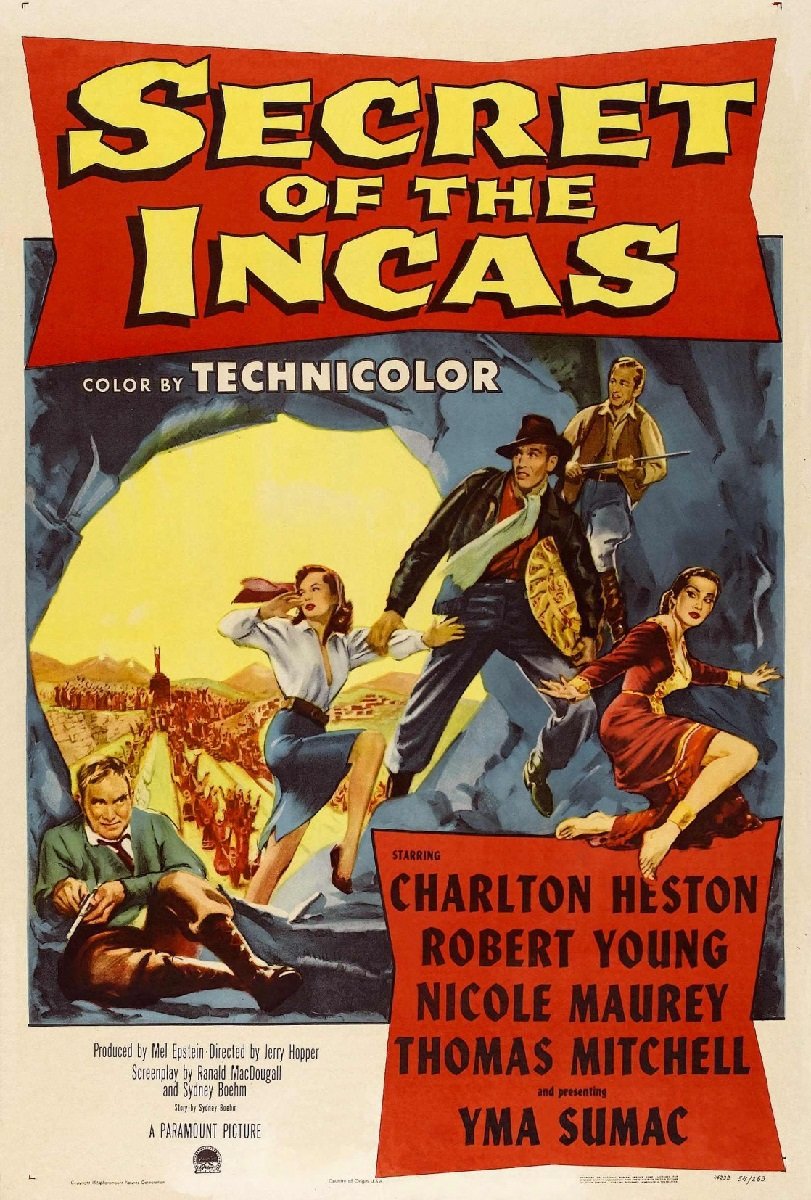
An Inca legend says the Inca Empire was destroyed by the gods when a gold and jeweled star burst was stolen from the Temple of the Sun centuries ago, and the ancient civilization will spring anew when the treasure is returned. The natives want it but so does Harry Steele, an American adventurer of slightly-shady ways who wants it for personal gain, as does his adversary, a grizzled old man even more into skulduggery than Steele. The latter teams up with Elena Antonescu, an Iron Curtain refugee fleeing from the MKVD. She can help him get a plane and he can help her escape Peru for the relative safety of Mexico.Is there a chance they will end up in a bickering love-hate relationship?... Is there a chance an American archaeologist, Dr. Stanley Moorehead, will come along as one corner of a romantic triangle?... Is there a chance that Yma Sumac (billed third on the posters and ads and special billed in the film), who can't act but can sing, will sing a few songs?... Is there a chance that these trite-sounding questions will develop into a film that is far from trite and vastly entertaining? Dang right, there is. Check it out. Written by Les Adams An adventurer searchers for hidden treasure in the Peruvian jungles.
The Battle for a Legendary City

Based loosely on Homers ancient Greek epic poem 'Iliad', Troy: Fall of a City tells the story of the 10 year siege of the ancient city of Troy by the Greeks, after Paris, the young prince of Troy falls in love with the wife of a Greek king and elopes with her. Written by ol-raptis Season: 1 Year: 2018
For Honor

It is the year 1250 B.C. during the late Bronze age. Two emerging nations begin to clash after Paris, the Trojan prince, convinces Helen, Queen of Sparta, to leave her husband, Menelaus, and sail with him back to Troy. After Menelaus finds out that his wife was taken by the Trojans, he asks his brother Agamemnon to help him get her back. Agamemnon sees this as an opportunity for power. So they set off with 1,000 ships holding 50,000 Greeks to Troy. With the help of Achilles, the Greeks are able to fight the never before defeated Trojans. But they come to a stop by Hector, Prince of Troy. The whole movie shows their battle struggles and the foreshadowing of fate in this remake by Wolfgang Petersen of Homer's "The Iliad." Written by Mensur Gjonbalaj An adaptation of Homer's great epic, the film follows the assault on Troy by the united Greek forces and chronicles the fates of the men involved.
Seek The Truth

Dan Brown's controversial best-selling novel about a powerful secret that's been kept under wraps for thousands of years comes to the screen in this suspense thriller from Director Ron Howard. The stately silence of Paris' Louvre museum is broken when one of the gallery's leading curators is found dead on the grounds, with strange symbols carved into his body and left around the spot where he died. Hoping to learn the significance of the symbols, police bring in Sophie Neveu (Audrey Tautou), a gifted cryptographer who is also the victim's granddaughter. Needing help, Sophie calls on Robert Langdon (Tom Hanks), a leading symbolized from the United States. As Sophie and Robert dig deeper into the case, they discover the victim's involvement in the Priory of Sion, a secret society whose members have been privy to forbidden knowledge dating back to the birth of Christianity. In their search, Sophie and Robert happen upon evidence that could lead to the final resting place of the Holy Grail, while members of the priory and an underground Catholic society known as Opus Dei give chase, determined to prevent them from sharing their greatest secrets with the world. A murder inside the Louvre, and clues in Da Vinci paintings, lead to the discovery of a religious mystery protected by a secret society for two thousand years, which could shake the...